Southern California’s annual Perseid meteor display returns this summer, offering observers the chance to witness up to 100 meteors per hour under ideal conditions. This comprehensive guide will help you maximize your viewing experience.
Understanding the Perseid Meteor Shower
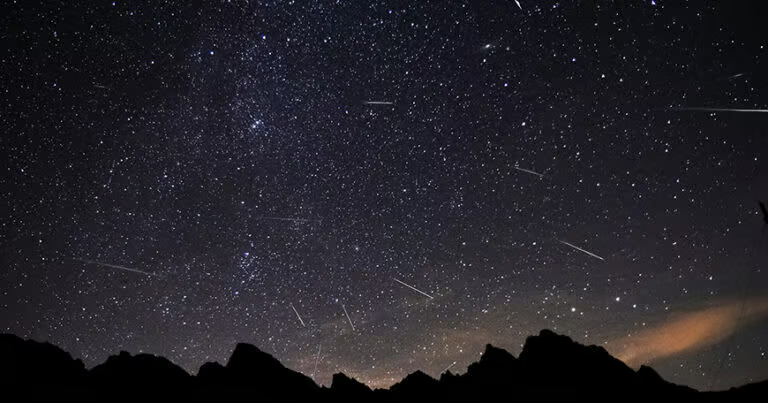
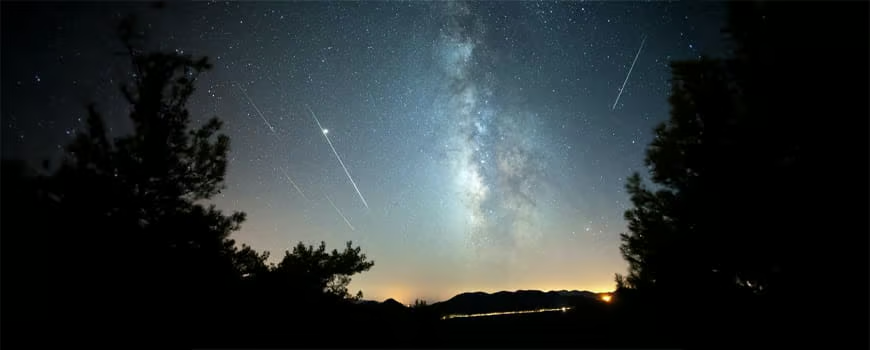
Each year, the Perseid spectacle unfolds as our planet journeys through ancient comet debris. This particular comet completes its solar orbit roughly once every 133 years, leaving behind a trail of cosmic particles. When these fragments collide with Earth’s atmosphere at tremendous velocities, they ignite and create the luminous streaks we recognize as “falling stars.”
The phenomenon remains active throughout July and August annually, though 2025’s peak performance is anticipated around August 12–13, according to reports from the respected journal Space.
When to Watch
Peak Dates: August 12–13, 2025 (expect up to 100 meteors per hour)
Optimal Viewing Times: Between midnight and sunrise
Important Moon Consideration: August 12–13 will feature a gibbous moon (nearly at full brightness), following the complete full moon on August 9. This lunar illumination may diminish the show, particularly for fainter meteors.
Best Strategy: Schedule your observation sessions for late July or early August before excessive moonlight begins interfering with visibility.
Where to Position Yourself
Essential Requirements:
Dark skies free from lunar glare and cloud cover
Locations distant from urban light interference
Clear view of the northeastern sky
Prime Southern California Viewing Locations:
Death Valley National Park
Joshua Tree National Park
Big Bear Lake area
Alternative Options for City Dwellers:
Numerous complimentary stargazing gatherings throughout Los Angeles
Special family-oriented events at L.A. County parks featuring overnight camping and meteor observation opportunities
Viewing Preparation Tips
Allow 20–30 minutes for your eyes to adapt to darkness
Bring a red flashlight to preserve night vision
Pack comfortable chairs or blankets for extended viewing
Dress warmly — desert locations can get surprisingly cold at night
Avoid looking at phone screens which will reset your night vision
What Equipment You Need
No special equipment required — the Perseid shower is best viewed with the naked eye. Telescopes and binoculars actually limit your field of view for meteor watching.
Optional Items:
Camera with long exposure capabilities for meteor photography
Star chart or astronomy app to identify constellations
Snacks and warm beverages for comfort during long viewing sessions