Location: Various Dark Sky Locations Near The AV
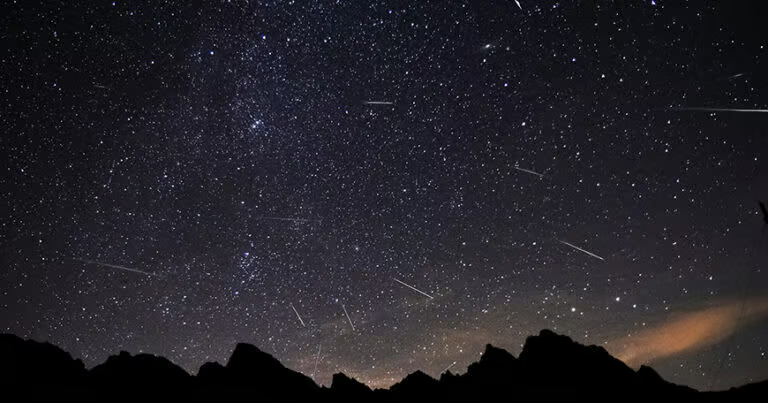
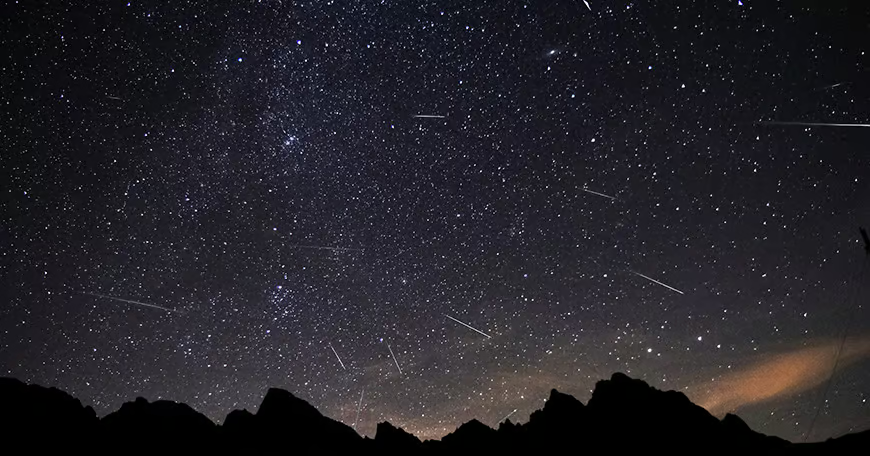
Hey AV explorers, Thomas here – this week’s featured trip is a little different than what I normally cover. The Perseid meteor shower peaks on the night of Wednesday, August 12th into Thursday, August 13th, and 2026 is shaping up to be the best conditions in nearly a decade – a new moon means perfectly pitch-black skies with zero moonlight interference and 50 to 75 brilliant fireballs per hour at peak. For astrophotographers, this is a golden opportunity: dark desert skies, dramatic Mojave landscapes, and one of the most photogenic meteor showers of the year all in the same night.
The best part for AV residents is that you barely have to leave home. The Antelope Valley and surrounding Mojave sit in one of the lowest light-pollution corridors in all of Southern California. Here are your best local options:
Saddleback Butte State Park (~25 min east of Lancaster on Avenue J) – The most convenient and family-friendly overnight option. The park is well known for stargazing and astronomical viewing – after sunset, visitors must occupy a campsite, which can be used all night. At Bortle 4, it’s dark enough to see the brighter Perseids with the naked eye but fainter ones will get lost from the light of the AV. First-come, first-served campsites with tables, BBQs, and restrooms. The closest and easiest legitimate all-night option for AV families who don’t want to venture far.
Red Rock Canyon State Park (~45 min north on the 14) is the top pick – canyon walls block ambient light from every direction, the terrain is wide open for blankets and tripods, and the on-site campground means you can stay all night legally and comfortably.
Open Mojave Desert along Highway 14 north of Mojave – Past the town of Mojave heading north, the horizon opens in every direction. Pull off the highway, kill your headlights, and the show begins. No facilities, no crowds, no cost – and for photographers, virtually zero light interference on any horizon.
Desert Tortoise Natural Area (California City) (~50 min from Lancaster) – The die-hard astrophotographer’s pick. This 39.5-square-mile protected reserve northeast of California City has zero lighting infrastructure of any kind – no roads, no facilities, no ambient glow. The result is some of the darkest accessible sky in the entire western Mojave. Completely flat, open desert in every direction means unrestricted 360-degree horizons and Milky Way views that rival anything in Southern California. Bring everything you need – there is nothing out here but darkness and stars.
Making it a Night:
Leave the AV after dinner and arrive at your chosen spot by 9 – 9:30 PM. Give your eyes at least 20–30 minutes to dark-adapt before you start counting – the difference is dramatic. Lie flat on your back with as wide a view of the sky as possible. Midnight to dawn is when rates peak, so plan to stay late if you can. Pack a blanket or reclining chair, snacks, layers, and a red-light headlamp – desert temps drop fast after dark even in August.
Thomas’s Local Tips:
- 🔴 Red light only – White flashlights and phone screens destroy your night vision and reset the 20–30 minute dark-adaptation process. Download a red-screen app before you go. This applies double if you’re shooting – stray white light will ruin other photographers’ long exposures.
- 📍 Red Rock Canyon is your best all-around bet – Genuine desert darkness, flat open terrain, dramatic canyon walls as foreground, and an on-site campground. The single best dark sky site within easy reach of the AV for casual viewers and photographers alike.
- 📷 Astrophotographers – head to the Desert Tortoise Preserve – Zero light pollution in any direction, flat 360-degree horizons, and complete solitude. Set your camera to a wide-angle lens, ISO 1600–3200, f/2.8 or wider, and 15–25 second exposures. Point northeast where meteors radiate from Perseus, include dramatic desert foreground, and shoot in burst mode to maximize your chances of capturing a fireball.
- ⏰ Wednesday night is the peak – don’t wait for the weekend – The predicted peak falls the morning of August 13, and the Perseids fall off rapidly after. Midnight to 4 AM is your prime window. The weekend will be noticeably quieter.
Nature’s calling, it’s time to pick up… See you out there!