Census-designated place / unincorporated community
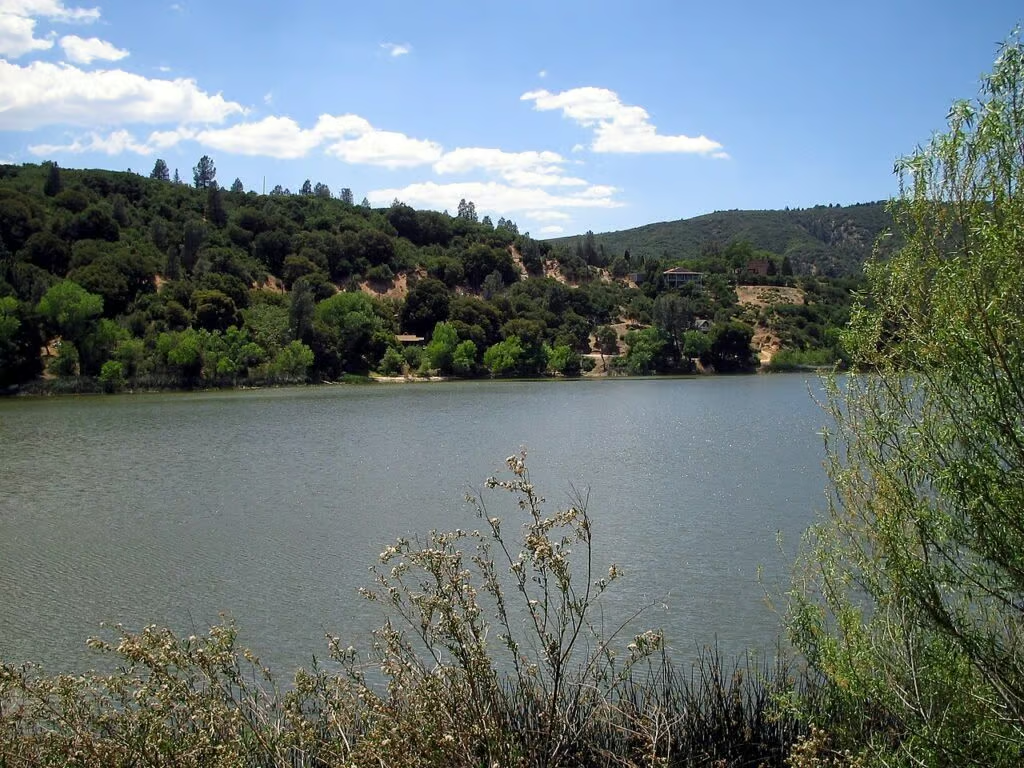
About Lake Hughes
Lake Hughes is a Census-designated place / unincorporated community in Los Angeles County, connected to the Lakes and foothills area of the Antelope Valley guide. The label matters. Some places in this section are incorporated cities with their own municipal governments, while others are census-designated places, unincorporated communities, rural town areas, county islands, military base communities, neighborhoods, or regional gateways. Calling everything a city would be easier, but it would flatten the way locals actually understand the valley.
This page is built as a practical local guide and a stronger community profile at the same time. It gives residents a page that names their place correctly, gives visitors a useful starting point, and keeps the facts clear: what the place is, where it sits, what official sources support the label, what nearby communities connect to it, and what a person can actually do in the area.
For locals, Lake Hughes is not just a dot on a regional map. It is part of a daily geography of schools, county services, city errands, desert roads, foothill routes, parks, libraries, museums, base access, business corridors, and weekend trips. For visitors, it is a way into the Antelope Valley beyond a single freeway exit or a quick pass through Lancaster and Palmdale.
Community Character
The lakes and foothills area is one of the Antelope Valley sections where water, mountain roads, ranch history, and small-community identity come closest together. The communities are quieter than the valley floor and feel tied to the ridges, canyons, and lake names that locals use as everyday landmarks.
The best way to understand Lake Hughes is to look at both the official sources and the lived pattern around it. The official side tells you whether the place is a city, CDP, unincorporated community, or regional destination. The lived side comes from the nearby communities, civic anchors, parks, libraries, museums, roads, and landmarks people use when they describe where they are from.
Lake Hughes belongs in this guide because the Antelope Valley is a region of named places, not just a pair of anchor cities. Some communities have city halls and large park systems. Others have county planning documents, branch libraries, local chambers, rural preservation areas, community standards districts, museums, parks, or neighboring guides that make the local identity visible. This page brings those pieces into one place.
Population And Place Type
Place type: Census-designated place / unincorporated community. County or region: Los Angeles County. Guide cluster: Lakes and foothills.
For population context, Census Reporter lists Lake Hughes, CA at an estimated 888 residents in the ACS 2024 5-year dataset. Census estimates are best read as planning context rather than a head count of every address, especially in rural and fast-changing high-desert communities.
Population and place labels can be confusing in the high desert because the words people use every day do not always match government categories. A community can be deeply real to residents without being incorporated. A census-designated place can have a federal statistical boundary without a city council. A neighborhood or county island can sit next to city services while remaining under county jurisdiction. This guide uses the most accurate label available so readers do not mistake local identity for municipal status.
- Lake Hughes is listed by the U.S. Census as a census-designated place.
- LA County Planning references Elizabeth Lake and Lake Hughes together in CSD materials.
- Keep lake, road, recreation, and history details sourced.
Local Spots, Parks, Libraries, And Civic Anchors
A useful Lake Hughes guide points readers toward real places and reliable resources, not vague travel copy. Good starting points for this page include LA County Antelope Valley Community Standards Districts, Adopted Community Standards Districts – LA County Planning, and Elizabeth Lake guide. These links are a mix of official government, park, library, museum, chamber, civic, or AntelopeValley.com guide resources, depending on what is available for the community.
- LA County Antelope Valley Community Standards Districts
- Adopted Community Standards Districts – LA County Planning
- Elizabeth Lake guide
County parks, city facilities, libraries, museums, visitor centers, chambers, and official planning pages do more than fill a source list. They show how a community functions. They tell a visitor where public access is appropriate, help a new resident find services, and give longtime locals a cleaner way to explain their part of the valley to friends, family, clients, or guests.
When a page has fewer public attractions, that is handled honestly. Rural communities may have fewer official visitor stops, but they still deserve accurate coverage. In those cases, this guide leans on county planning sources, nearby community pages, events, business listings, and public parks or libraries in the surrounding area instead of inventing attractions that do not have a reliable source.
Things To Do In And Near Lake Hughes
Visitors come through for scenic drives, back-road routes, nearby trails, seasonal views, and a different sense of the high desert. Residents tend to value the separation from the busier valley floor while still staying connected to Palmdale, Lancaster, and the rest of northern Los Angeles County.
For a simple outing, start with the strongest official anchor on the page, then connect it to nearby communities: Elizabeth Lake, Green Valley, Leona Valley, and Three Points – Liebre Mountain. That might mean a park stop, a museum visit, a library program, a community event, a scenic drive, a state park, a national forest route, a city arts venue, or a local business found through the AntelopeValley.com directory.
Visitors should pay attention to distance, weather, daylight, road conditions, and public access. The Antelope Valley can look close on a map while still requiring real drive time, especially between foothill communities, mountain gateways, and East Kern desert destinations. In summer, heat matters. In the mountains, storms and closures can matter. In rural areas, private property boundaries matter. The best trips are planned with official links open and a flexible sense of time.
Locals can use this page differently. Instead of treating Lake Hughes as a tourist checklist, use it as a hub: check events near the community, browse local businesses, look at nearby guides, and follow the official links for parks, libraries, planning, museums, or civic updates. The page should earn its keep by being useful to the people who live here.
A Good Day Around Lake Hughes
A good day around Lake Hughes starts with orientation. Look at the place label, scan the nearby communities, then choose one public anchor from the highlights list. If the page points to a park, library, museum, city site, visitor center, chamber, or forest resource, that is usually the best first stop for current hours, rules, programs, and visitor information.
From there, build outward. Pair Lake Hughes with Elizabeth Lake, Green Valley, Leona Valley, and Three Points – Liebre Mountain, then add a meal, a local shop, an event, a trailhead, a museum, or a scenic drive where sources support it. The goal is not to rush through every name in the valley. The best Antelope Valley days are usually slower: enough time to notice the sky, the roads, the ridgelines, the wind, and the difference between one community and the next.
If you are new to the area, this page can also help you ask better questions. Is Lake Hughes incorporated or unincorporated? Which county serves it? What is the nearest library or official park? Which nearby communities share services or identity? Which official source should you trust for current details? Those answers make relocation research, weekend planning, and local storytelling much easier.
Why Locals Are Proud
The pride here is grounded in place names that feel old, familiar, and specific: lake roads, community standards districts, foothill neighborhoods, and small stops that make sense only after you have spent time in the area.
What makes Lake Hughes worth covering is not always the presence of a famous attraction. Sometimes it is the way a name holds a landscape together. Sometimes it is a library, a county park, a stretch of road, a civic district, a museum, a base, a mountain gateway, or a cluster of neighboring communities that locals know instinctively. Good community pages should make that knowledge visible.
This guide is written to make residents feel recognized and to make visitors more respectful. That means using sourced claims, naming local spots when sources are available, avoiding made-up film credits or invented folklore, and giving readers direct links to the agencies and organizations that can confirm details. Pride and accuracy belong together.
Nearby Communities To Explore
Lake Hughes connects naturally with Elizabeth Lake, Green Valley, Leona Valley, and Three Points – Liebre Mountain. Follow those pages to understand how the community fits into the larger Antelope Valley, from the city centers and westside rural areas to the foothills, East Kern desert, aerospace corridor, and mountain gateways.
The Antelope Valley rewards people who learn its local names. Once you know the difference between an incorporated city, a census-designated place, an unincorporated community, a neighborhood, a military base community, and a regional destination, the map becomes richer. Lake Hughes is one part of that larger story.
Fun Fact
Fun fact: Lake Hughes has a standalone Census Reporter profile in this guide, with an estimated population of 888 in the ACS 2024 5-year dataset.
Events Near Lake Hughes
No matching community events are listed right now. See all Antelope Valley events.
Local Businesses
No matching local business listings are shown yet. Browse Antelope Valley business listings.
Nearby Communities
Related Guides
Official Links And Sources
- U.S. Census TIGERweb CDP file
- LA County Antelope Valley Community Standards Districts
- Lake Hughes, CA population profile – Census Reporter
- Wikipedia overview – secondary source for orientation and citation discovery.
- Local geography. Image source.